In the manufacturing industry, the Cut To Length Line (CTL) stands as a crucial piece of equipment, especially in metal processing. As a supplier of Cut To Length Lines, I’ve witnessed firsthand the significance of each component within these systems. One of the most vital aspects is the electrical system, which plays a multifaceted and indispensable role in the operation of a Cut To Length Line. Cut To Length Line

1. Power Supply and Distribution
The electrical system in a Cut To Length Line is responsible for providing and distributing power to all the components of the machine. At the heart of this process is the main power supply, which is typically connected to the industrial electrical grid. This power source needs to be stable and reliable, as any fluctuations can lead to malfunctions in the equipment.
The electrical system then distributes this power to various sub – systems within the CTL. For example, the motors that drive the conveyor belts, the shearing mechanism, and the decoiler all require a specific amount of power to operate efficiently. The distribution is carefully regulated through circuit breakers, transformers, and other electrical components. Circuit breakers act as safety devices, cutting off the power supply in case of an overload or short – circuit, preventing damage to the equipment and ensuring the safety of the operators.
Transformers are used to step down the high – voltage power from the grid to a level suitable for the individual components of the CTL. This is essential because different parts of the machine have different power requirements. For instance, the control panel and the sensors may operate on a lower voltage compared to the large motors.
2. Control and Automation
The electrical system is the nerve center of the Cut To Length Line when it comes to control and automation. Modern CTLs are highly automated, and the electrical system enables precise control over every aspect of the production process.
Programmable Logic Controllers (PLCs) are a key part of the electrical control system. These controllers are programmed to execute a series of operations based on pre – set parameters. For example, they can control the speed of the conveyor belts, the position of the shearing blade, and the length of the cut pieces. The PLCs receive input from various sensors placed throughout the CTL, such as proximity sensors, photoelectric sensors, and load cells.
Proximity sensors are used to detect the presence of the metal coil or the cut pieces. They send signals to the PLC, which then decides whether to start or stop certain operations. Photoelectric sensors can be used to measure the length of the metal strip, ensuring that the cut pieces are of the correct size. Load cells are used to monitor the tension in the metal strip, which is crucial for maintaining the quality of the cut.
The electrical system also allows for remote monitoring and control. Through a Human – Machine Interface (HMI), operators can access and adjust the settings of the CTL from a central control station. This not only improves efficiency but also reduces the need for operators to be physically present near the machine at all times.
3. Safety and Protection
Safety is of utmost importance in any industrial setting, and the electrical system in a Cut To Length Line plays a critical role in ensuring the safety of the operators and the equipment.
As mentioned earlier, circuit breakers are used to protect the electrical system from overloads and short – circuits. In addition to circuit breakers, the electrical system also includes emergency stop buttons. These buttons are strategically placed throughout the CTL and can be pressed in case of an emergency to immediately cut off the power supply to the machine.
Grounding is another important safety feature of the electrical system. Proper grounding helps to prevent electrical shocks by providing a path for the electrical current to flow safely into the ground in case of a fault.
The electrical system also includes safety interlocks. These are devices that prevent certain operations from occurring unless specific conditions are met. For example, the shearing blade cannot operate if the conveyor belt is not moving or if the metal strip is not properly positioned.
4. Diagnostic and Maintenance
The electrical system in a Cut To Length Line is equipped with diagnostic capabilities that help in identifying and troubleshooting problems. Modern CTLs are often equipped with self – diagnostic software that can detect faults in the electrical components.
The sensors and monitoring devices in the electrical system continuously collect data about the operation of the machine. This data can be analyzed to detect any signs of wear and tear, abnormal behavior, or potential failures. For example, if a motor is drawing more current than normal, it could indicate a problem with the motor or the load it is driving.
The diagnostic system can also provide information about the status of the electrical components, such as the temperature, voltage, and current. This information can be used by maintenance personnel to schedule preventive maintenance, reducing the risk of unexpected breakdowns and minimizing downtime.
5. Integration with Other Systems
In today’s manufacturing environment, Cut To Length Lines are often integrated with other systems in the production line. The electrical system plays a crucial role in this integration.
For example, a CTL may be integrated with a coil handling system, a storage system, or a quality control system. The electrical system allows for seamless communication between these different systems. It can send and receive signals to coordinate the movement of the metal coils, the storage of the cut pieces, and the inspection of the final products.
This integration also enables the implementation of Industry 4.0 concepts, such as the Internet of Things (IoT). The electrical system can collect and transmit data to a central database, where it can be analyzed to optimize the production process, improve quality control, and reduce costs.
Conclusion
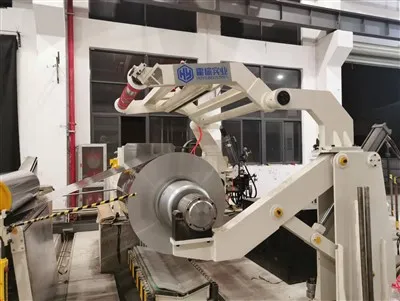
In conclusion, the electrical system in a Cut To Length Line is a complex and essential part of the machine. It provides power, controls the operation, ensures safety, enables diagnostics and maintenance, and facilitates integration with other systems. As a supplier of Cut To Length Lines, I understand the importance of a reliable and efficient electrical system.
Cut To Length Line If you are in the market for a Cut To Length Line or need to upgrade your existing equipment, I encourage you to reach out to us. Our team of experts can provide you with detailed information about our products, including the advanced electrical systems we incorporate. We are committed to providing high – quality solutions that meet your specific needs and help you optimize your production process.
References
- "Industrial Electrical Systems: Design and Installation" by John Smith
- "Automation in Metal Processing" by Jane Doe
- "Safety Standards for Electrical Equipment in Manufacturing" by the National Electrical Manufacturers Association
Shanghai HOYO Industries Co., Ltd.
Shanghai HOYO Industries Co., Ltd. is one of the most professional cut to length line manufacturers and suppliers in China, featured by quality products and competitive price. Please rest assured to buy cheap cut to length line for sale here from our factory. Contact us for customized service.
Address: No.8, Jianding Road, Fengjing Town, Jinshan District, Shanghai, China
E-mail: info@hoyomachinery.com
WebSite: https://www.hoyomachinery.com/
