As a seasoned supplier of piston kits, I’ve witnessed firsthand the distinct requirements and characteristics of piston kits designed for gasoline and diesel engines. These differences are crucial for engine performance, durability, and efficiency. In this blog, I’ll delve into the key disparities between piston kits for gasoline and diesel engines, shedding light on the technical nuances that every engine enthusiast and professional should be aware of. Piston Kit

Combustion Process and Pressure Differences
The most fundamental difference between gasoline and diesel engines lies in their combustion processes. Gasoline engines use a spark – ignition system, where a spark plug ignites a mixture of air and fuel. This process occurs at relatively lower compression ratios, typically ranging from 8:1 to 12:1. The lower pressure generated during combustion means that piston kits in gasoline engines don’t need to withstand extremely high forces.
On the contrary, diesel engines operate on a compression – ignition principle. The air in the cylinder is compressed to a very high degree, raising its temperature significantly. When the fuel is injected, it ignites spontaneously. Diesel engines have much higher compression ratios, usually between 14:1 and 22:1. As a result, piston kits for diesel engines must be able to handle the intense pressures and stresses generated during the combustion process.
This difference in combustion pressure has a direct impact on the design of piston kits. Piston kits for diesel engines are often made from stronger and more durable materials. For example, high – strength alloys are commonly used to ensure that the pistons can withstand the high – pressure shocks without deforming or wearing out prematurely. In gasoline engines, while still requiring good quality materials, the design can be relatively more flexible as the pressure requirements are less severe.
Heat Dissipation Requirements
Another significant difference is in the heat dissipation requirements. Diesel engines generate more heat during the combustion process compared to gasoline engines. The higher compression ratios and the nature of compression ignition lead to more intense heat generation. Consequently, piston kits for diesel engines need to have better heat – dissipation capabilities.
Pistons for diesel engines are often designed with features that enhance heat transfer. This can include special coatings on the piston surface that improve thermal conductivity or specific internal cooling passages. These cooling passages allow engine oil to circulate within the piston, carrying away the excess heat. In addition, the shape and design of the piston crown are optimized to ensure efficient heat dissipation.
Gasoline engines, on the other hand, have lower heat loads. While heat dissipation is still an important consideration, the requirements are not as extreme as in diesel engines. Piston kits for gasoline engines typically rely on a combination of the engine’s cooling system and the natural heat – transfer properties of the piston material. However, with the increasing demand for high – performance gasoline engines, some modern piston designs do incorporate improved heat – management features.
Piston Shape and Design
The shape of the piston is also tailored to the specific requirements of gasoline and diesel engines. In gasoline engines, the piston crown is often designed to promote good air – fuel mixing. A flat or gently domed piston crown is common, which helps to create a uniform mixture of air and fuel near the spark plug. This is essential for efficient combustion in a spark – ignition engine.
Diesel engine pistons, however, have a more complex shape. They usually feature a deep bowl in the center of the piston crown. This bowl is designed to optimize the air – fuel mixing process during injection. When the fuel is injected into the high – pressure, high – temperature air in the cylinder, the shape of the bowl helps to create swirl and turbulence, ensuring thorough mixing and efficient combustion.
Furthermore, the ring grooves on pistons differ between gasoline and diesel engines. Diesel engine pistons typically have deeper and wider ring grooves. This is because diesel engines require more effective sealing to contain the high pressures and prevent blow – by. The rings in diesel engine piston kits also need to be more robust and have better wear resistance compared to those in gasoline engines.
Lubrication Requirements
Lubrication is vital for the smooth operation and longevity of any engine. Gasoline and diesel engines have different lubrication requirements, which in turn affect the design of piston kits.
In gasoline engines, the lubrication needs are relatively straightforward. The engine oil provides a thin film of lubrication between the piston and the cylinder wall, reducing friction and wear. The piston rings also play a role in distributing the oil evenly along the cylinder wall. Piston kits for gasoline engines are designed to work in harmony with the engine’s lubrication system to ensure efficient operation.
Diesel engines, due to their higher pressures and temperatures, demand a more robust lubrication system. The piston kits in diesel engines need to be able to withstand the harsher lubrication conditions. The pistons are often designed with features that help to retain the lubricating oil film under high – pressure conditions. Additionally, the piston rings in diesel engines are engineered to have better oil – control capabilities, preventing excessive oil consumption while maintaining proper lubrication.
Emission Considerations
In today’s world, emission control is a major concern for both gasoline and diesel engines. The design of piston kits can have an impact on engine emissions.
Gasoline engines are often subject to strict regulations regarding the emission of hydrocarbons (HC), carbon monoxide (CO), and nitrogen oxides (NOx). Piston kits for gasoline engines can be designed to improve combustion efficiency, which in turn reduces emissions. For example, a well – designed piston can help to create a more complete burn of the air – fuel mixture, minimizing the production of unburned hydrocarbons and carbon monoxide.
Diesel engines, on the other hand, are known for their higher particulate matter (PM) and NOx emissions. Piston kits for diesel engines can be optimized to reduce these emissions. The shape of the piston crown and the design of the combustion chamber can influence the formation and reduction of PM and NOx. Additionally, advanced piston materials and coatings can help to improve the overall efficiency of the diesel engine, leading to lower emissions.
Application – Specific Considerations
The applications of gasoline and diesel engines also play a role in the design of piston kits. Gasoline engines are commonly used in passenger cars, small boats, and light – duty vehicles. These applications require piston kits that offer a good balance of performance, fuel efficiency, and smooth operation.
Diesel engines, on the other hand, are widely used in heavy – duty trucks, buses, construction equipment, and industrial applications. Piston kits for these applications need to be designed for long – term durability and high – load operation. The pistons must be able to withstand the constant high – pressure and high – temperature conditions associated with heavy – duty use.
Conclusion
In conclusion, the differences between piston kits for gasoline and diesel engines are significant and are driven by the unique characteristics of each engine type. From the combustion process and pressure differences to heat dissipation, piston shape, lubrication, emissions, and application – specific requirements, every aspect of piston kit design is carefully considered to meet the demands of the engine.
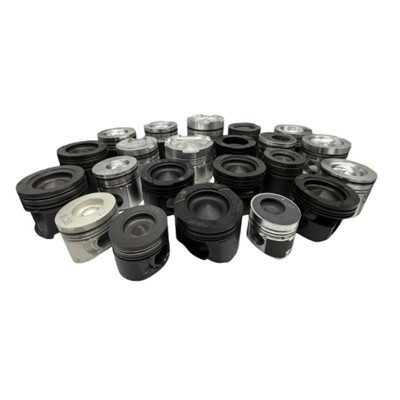
As a piston kit supplier, I understand the importance of providing high – quality products that are tailored to the specific needs of gasoline and diesel engines. Whether you’re an engine manufacturer, a repair shop, or an individual enthusiast, choosing the right piston kit is crucial for achieving optimal engine performance and durability.
YUNNEI Piston If you’re in the market for piston kits for either gasoline or diesel engines, I’m here to help. Our team of experts can provide you with detailed information and guidance on selecting the most suitable piston kits for your applications. We have a wide range of piston kits available, all manufactured to the highest standards of quality and precision. Contact us today to start a procurement discussion, and let’s work together to find the perfect piston kits for your engines.
References
- Heywood, J. B. (1988). Internal Combustion Engine Fundamentals. McGraw – Hill.
- Taylor, C. F. (1966). The Internal Combustion Engine in Theory and Practice. MIT Press.
Hebei Yuwei Piston Co., Ltd.
As one of the most professional piston kit manufacturers and suppliers in China, we’re featured by quality products and good service. Please rest assured to buy customized piston kit made in China here from our factory. Also, quotation is available.
Address: Beizhujiacun Village, Sujiuzhuang Town, Ningjin County, Xingtai City, Hebei Province
E-mail: jack@ywpiston.com
WebSite: https://www.ywpiston.com/
