Hey everyone, it’s Mia here, and if you’ve ever walked the line between staying innovative and playing by the rules in the power supply industry, you know how confusing things can get lately. For the past six years, my small but tight-knit team has been supplying non-PFC power supplies to clients across the industrial, consumer electronics, and telecommunications spaces—so when I started getting emails last year asking, “Wait, are non-PFC units even allowed anywhere these days?” I knew I couldn’t just answer with a yes or no. There’s a lot of nuance here, and as someone who’s spent years refining our products to meet real-world needs, I want to break it down straight, no jargon, no fluff. Non PFC Power Supply
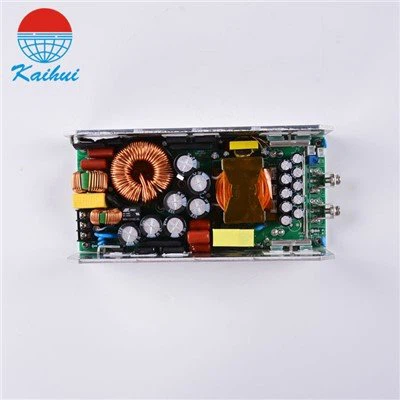
First, let’s get one thing clear: what even is a non-PFC power supply, and why does anyone care? PFC stands for Power Factor Correction, a technology that adjusts how a power supply draws current from the grid to make it as efficient as possible, reducing wasted energy that would otherwise heat up wires or cause voltage fluctuations. Non-PFC units skip that step, which makes them simpler, cheaper, and smaller—huge benefits for applications where cost is king, or space is tight, like low-power sensors, small home appliances, or backup power systems for rural setups. The tradeoff is lower overall energy efficiency and a higher “power factor” number that can impact grid stability in high volumes.
Now, the big question: where are non-PFC power supplies allowed? The short answer is: they’re not banned globally, but regional regulations have put strict limits on their use in high-power applications, and some regions have outright restricted their sale for certain end uses. Let’s walk through the key markets we deal with, because that’s where most of our clients’ confusion comes from.
Starting with the European Union, which has been a game-changer here. The EU’s Ecodesign Directive, first updated in 2019 and revised again in 2021, sets efficiency standards for power supplies across all device categories. For power supplies with an output of 75W or more, non-PFC units are effectively banned for most new products sold in the EU. The rule says any power supply over 75W must have active or passive PFC, with a power factor of 0.9 or higher at full load. We’ve seen this firsthand: a client in Germany that used to buy our 100W non-PFC units for their small workshop tools had to switch to PFC models within two years, because EU customs started seizing non-compliant shipments in 2022. That said, the exemption here is for low-power units: under 75W, non-PFC units are still allowed in the EU, as long as they meet lower efficiency thresholds (which our small non-PFC models do, by the way—we’ve tested them to comply with the EU’s low-power standards).
Next, the United States. The U.S. Department of Energy (DOE) has similar efficiency rules, but they’re more tiered and less strict than the EU’s for lower-power applications. For power supplies over 100W, the DOE requires PFC as well, but for units between 50W and 100W, non-PFC is still permitted, as long as they meet minimum efficiency levels. For units under 50W? Barely any regulation at all, so non-PFC is still fair game. We have a client in Texas that makes wireless security cameras who’s been using our 12V, 25W non-PFC power supplies for five years, and they haven’t had any issues with compliance during inspections. The U.S. rules do apply to products sold for commercial use, but residential-use power supplies have even looser standards, so non-PFC is still widely available there.
Then there’s Asia, which is a mixed bag. China, which has been updating its energy efficiency regulations to align with global standards, banned non-PFC power supplies over 50W in 2023 for new products sold domestically. That’s a big change—last year, we had three clients in Shanghai that had to adjust their product lines to use PFC models, or switch to our 45W and under non-PFC units, which still meet China’s lower-power rules. On the other hand, countries like India and Indonesia haven’t imposed strict PFC mandates yet, so non-PFC power supplies are still fully allowed for all output levels, as long as they’re safe. We’ve been expanding our client base in India over the past year, and many of their small appliance manufacturers prefer our non-PFC units because they’re 15% cheaper than comparable PFC models, which helps them keep consumer prices low.
It’s not just about power output, either—there are exceptions for specific use cases that a lot of people don’t know about. For example, off-grid power systems, like solar setups in remote areas, often rely on non-PFC power supplies because grid stability isn’t a concern, and PFC units can add unnecessary cost. Medical devices, which require compact, low-cost power supplies for portable equipment, also often get exemptions from PFC mandates in regions that have strict rules. We supply a small batch of non-PFC units to a medical device maker in Brazil, for example, and they’re allowed because the units are for portable blood pressure monitors, where space and cost are more critical than grid efficiency.
Now, I know what some of you are thinking: “Why would anyone choose a non-PFC unit over a PFC one, if so many regions are restricting them?” That’s a fair question, and it’s why our business is still growing, even with the regulatory changes. Let’s be real: PFC technology is great for large, high-power applications, but for low-power, cost-sensitive products, the extra cost of a PFC unit can be the difference between a product being profitable or not. For example, a $15 small kitchen appliance that uses a $2 PFC power supply will lose money, but the same appliance with a $1.75 non-PFC power supply will turn a profit. That’s the reality for many small manufacturers, especially in emerging markets where price point is everything for consumers.
Also, let’s talk about quality—this is something I don’t think gets mentioned enough. A lot of people assume non-PFC power supplies are low-quality, but that’s not the case. Our non-PFC units go through the same safety testing as our PFC models: we test for over-voltage, over-current, and short-circuit protection, and we comply with all relevant electrical safety standards, like UL 62368 and CE. The only difference is that we don’t add the PFC circuit, which saves on materials and labor, not on safety. We have a 99.8% return rate over the past six years, which is as good as any PFC power supply I’ve seen, so quality isn’t a tradeoff here.
I’ve also seen a lot of misinformation online lately, like claims that non-PFC power supplies are banned everywhere, or that they’re a fire hazard. That’s not true, and it’s important to get the facts straight. The regulations are targeted at high-power units where the grid impact is significant, not low-power, safe units. For example, I saw a blog post last year that said non-PFC power supplies are banned in the entire EU, which is wrong—you can still buy a 12V, 10W non-PFC power supply for your phone charger or LED lightbulb in any EU country, as long as it meets low-power efficiency rules. The ban only applies to units over 75W for new products sold after 2021.
So, what does this mean for someone looking to buy a non-PFC power supply right now? First, check the regulations for your region and your specific application. If you’re in the EU and need a power supply under 75W, you’re in the clear. If you’re in China and need a unit over 50W, you’ll need to go PFC, but our 45W and under units work perfectly for that. If you’re in India, the sky’s the limit—non-PFC is allowed for everything. Second, work with a supplier that knows the regulatory landscape, not just the product specs. A good supplier will help you navigate which units are allowed in your market, not just sell you the cheapest product.
For our part, we’ve adapted our business to the regulatory changes, too. We’ve phased out all non-PFC units over 75W for clients in the EU, US, and China, because there’s no demand for them now that those markets have restrictions. But we’ve doubled down on our low-power non-PFC lines, expanding our production capacity for units under 50W, and we’ve added testing to ensure all our products meet the safety and efficiency rules for every region we serve. We also keep a close eye on upcoming regulations—we saw the EU’s 2021 update coming two years in advance, so we were able to help our clients adjust their product lines without losing sales.
Another thing I want to mention: the future of non-PFC power supplies. Some people think that as energy efficiency becomes more of a priority globally, non-PFC units will be phased out entirely, but I don’t see that happening for low-power applications. Even the most aggressive regulatory frameworks still carve out exemptions for units under a certain output, because the grid impact is negligible. Plus, the demand for low-cost, compact power supplies for small devices isn’t going anywhere—think of all the smart home devices, sensors, and portable electronics that don’t need high power, and would be too expensive with PFC. As long as there’s a market for those products, there will be a need for reliable non-PFC power supplies.
I’ve been in this industry for over a decade, and the biggest lesson I’ve learned is that rules don’t have to kill innovation—they just require adaptation. When the EU’s regulations came out, a lot of our competitors panicked and dropped their non-PFC lines entirely, but we saw it as an opportunity to focus on the segment where non-PFC units still add real value. We’ve grown our client base by 35% over the past two years, even with the regulatory changes, because we provide a product that meets real needs, complies with the rules, and is affordable.
If you’re a manufacturer, designer, or engineer who’s been confused about whether non-PFC power supplies are allowed in your region, or if you have questions about which units are right for your application, don’t hesitate to reach out. We work with small startups and large corporations alike, and we’re always happy to help you navigate regulations, compare products, and find the right power solution for your project. There’s no one-size-fits-all answer here, but with the right information, you can make a choice that’s both compliant and cost-effective.

At the end of the day, power supply technology is all about balance: balancing efficiency, cost, size, and compliance. Non-PFC power supplies aren’t for every application, but they’re still a vital option for millions of products around the world. As long as regulators keep that in mind, and suppliers keep adapting to their needs, they’ll continue to play an important role in the industry for years to come.
PCB Power Supply Reference:
- European Commission. Ecodesign for Energy-Related Products: Power Supplies. 2021.
- U.S. Department of Energy. Energy Efficiency Program for External Power Supplies. 2022.
- Ministry of Industry and Information Technology of China. Energy Efficiency Standards for Power Supplies for Information Technology Equipment. 2023.
- International Electrotechnical Commission. Safety Requirements for Audio/Video, Information and Communication Technology Equipment – Power Supplies. 2020.
Guangzhou Kaihui Electronics Co., Ltd.
Guangzhou Kaihui Electronics Co., Ltd. is one of the most professional non pfc power supply manufacturers and suppliers in China, specialized in providing the best customized service. We warmly welcome you to buy high quality non pfc power supply made in China here from our factory.
Address: 2F BLDG8, Standard Ind.Park, Dongchong Town, Nansha District 511453, Guangzhou, Guangdong, China
E-mail: amy@gzkaihui.com
WebSite: https://www.kaihuipowersupply.com/
