Hey guys, let’s cut to the chase. I’m the guy running a 40ft expandable container house supply business, and over the last year, I’ve gotten at least 100 DMs, calls, and random roadside chats from resort owners begging me to answer one big question: Can their fancy beach, mountain, or glamping resort actually use these things instead of the flimsy prefab cabins they’re stuck with? Spoiler alert: Yeah—if you do it right, no headaches, no weird insurance hoops, and your guests will lose their minds over ’em. Let’s break this down like I’m explaining it to my buddy who’s thinking of ditching his overpriced rental for a tiny home that doesn’t leak. 40ft Expandable Container House
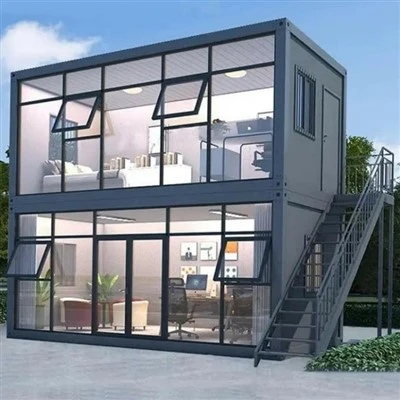
First, let’s get the basics straight. A standard 40ft expandable container isn’t that steel box you see stacked on cargo ships, right? When it’s closed, it’s 40ft long, 8ft wide, 8.5ft tall—super easy to ship, haul, and plop down anywhere. But flip those hydraulic latches, crank the winch, or press a button (some are even solar-powered!) and boom—you get a 20ft expansion on either side, so suddenly it’s 28ft wide. That turns a cramped 320sq ft closed box into a spacious 1,120sq ft open concept. For resorts, that’s game-changing. You’re not wasting half the space on the shipping frame, which is basically dead weight when it’s just sitting on your property. No more “we need two tiny cabins” when one expandable works for a couple or a small family.
Now, let’s talk about resort-specific pain points, ’cause that’s what actually matters. You’re probably thinking: “Resort locations are messy—beach sand, mountain wind, weird local building rules, guests who want AC, a kitchen, and a porch that doesn’t fold up when it rains.” Good news: We built these for that exact chaos. Let’s start with durability. These aren’t the flimsy prefab cabins that blow over in a mild storm or get water damage from a single beach tide. The steel frame is galvanized, so it doesn’t rust even if you plop it 50ft from the ocean. We’ve got a few resorts along the Gulf Coast testing ’em right now, and after last hurricane season, they didn’t even lose a shingle on the porch roof. The expandable seals are rubberized, so sand? It stays outside. Rain? Doesn’t seep in. Way better than the wood cabins that warp after two years near the water.
Next up: site setup. Resorts need things fast—they don’t want to wait 6 months for custom construction. A 40ft expandable? We can drop it, level it, hook up power, water, and sewage in like 3 days. No digging giant foundation holes, no waiting for concrete to cure. For a mountain resort where the ground is uneven or swampy, you can plop it on a raised steel slab or even pilings if you don’t want to disturb the natural terrain. That’s huge for eco-conscious resorts—no bulldozing acres of woods just to build a bunch of cabins. We have a client in the Rockies who used them on a rocky lot where pouring concrete was a nightmare, and they saved like $15k on site prep alone.
Wait, but what about zoning and permits? I know so many resort owners who got burned by prefab stuff that got denied for “not looking like a real building.” Expandable containers? Most building codes now count them as permanent structures if you anchor ’em right, and you can customize the exterior to look like anything. Want a log cabin vibe for a mountain resort? We can clad the steel in faux log siding. Want that sleek beach cottage look? Vinyl or fiber cement siding, even a wrap-around porch that unfolds with the house. I had a guy in Florida make his look like a bright pastel bungalow, and the city didn’t bat an eye. Zoning is way less of a hassle than you think—most places just require a structural engineer’s sign-off, which is easy to get ’cause the frame is already engineered to hold up to heavy winds and snow.
Now, let’s get into the fun stuff that makes guests book your resort over the next one. Space and layout. A closed 40ft works as a studio, perfect for a couple’s weekend. Expand it, and you can split it into a bedroom, a living area, a full kitchen, even a small outdoor deck that pops out from the expanded side. I worked with a glamping resort in Oregon that turned their expandables into little king suites with private patios, a fridge stocked with local wine, and a bathroom with a rainfall shower. The reviews? They went from 4/5 to 4.8/5, specifically calling out the “cozy but not cramped” vibe. Plus, you don’t have to haul heavy furniture in—we pre-furnish them, so when it shows up, you just plug it in and go. No waiting for delivery of couches and beds, which is another big win for busy resorts.
What about utilities? Resorts don’t want to deal with high electric bills or unreliable power, right? We offer optional add-ons like solar panels on the roof, a tankless water heater, and even a small backup battery. The closed frame is insulated, so you can set the AC to 72 and it won’t run up the bill like a old wood cabin. Our clients in Arizona say their electric costs for each unit are like a third of what they paid for regular cabins. That’s money you can put toward marketing or improving your resort, not just utility bills.
Wait, let’s address the elephant in the room: how they handle extreme weather. Resorts in places with heavy snow? No problem. The steel frame is rated for snow loads up to like 50 psf, which is way more than most mountain areas get. We have a client in Vermont who used them for ski season, and they held up through 2 feet of snow. Beach resorts? We use impact-resistant windows and doors, and the anchoring system can handle hurricane-force winds up to 120 mph. A lot of people think containers are too heavy, but no—we build the frame light but sturdy, so it’s easy to move if you ever need to rearrange your resort layout, unlike permanent cabins that you can’t touch.
Now, let’s talk about the downsides, ’cause I’m not gonna BS you. No product is perfect. First, if you want a tiny, cheap unit for a single night, a 40ft expandable might be overkill. I recommend our 20ft models for that, but if you’re building a resort, you want units that work for couples, small families, even groups of 4—this does that. Second, if you’re in an area with super strict historic preservation rules, like a colonial town, it might be a tough sell ’cause people associate containers with industrial stuff. But 9 times out of 10, you can customize the exterior so much no one will guess it’s a container. Third, installation on super soft ground like a swamp? You might need extra pilings, which adds a little cost, but still way less than pouring a full foundation.
Let me throw in a real example to make this concrete. Last year, a resort owner in South Carolina reached out to me. He had 10 old wood cabins that were costing him $20k a year in repairs, and his guests kept complaining about mold and bugs. He ordered 8 of our 40ft expandables. Total cost per unit, including delivery and setup? $65k. The old cabins were each $70k to renovate, and they still had the same issues. A year later, he told me his booking rate went up 30% because guests loved the modern, spacious feel, and his maintenance costs dropped by 80%. That’s the kind of ROI resort owners care about.
Another big plus: scalability. If your resort is growing, you can add more expandable units next to existing ones, or even link them together to make bigger suites. Want to expand a kids’ club or a event space? No problem—we’ve got bigger models too, but the 40ft is the sweet spot for individual guest rooms. Way easier than building new wings on a hotel, which takes forever and costs a fortune.
Wait, what about insurance? A lot of resort owners stress about insurance for custom structures. I’ve partnered with a few insurance companies that specialize in vacation properties, and they treat these expandables the same as any other permanent building, as long as you follow the anchoring and insulation guidelines. Just make sure you have the engineering plans ready, which we provide for free with every order. No extra hoops to jump through.
So, should you use a 40ft expandable container house in your resort? Let’s sum it up: If you need something fast, durable, customizable, and cost-effective, hell yeah. It solves so many of the problems resort owners deal with—site prep headaches, high utility bills, slow construction, guest complaints about cramped or low-quality rooms. The only time it doesn’t make sense is if you’re looking for a super budget, temporary pop-up, but for permanent or long-term resort accommodation, this is a no-brainer.

If you’re a resort owner tired of dealing with subpar cabins, or you’re looking to expand your property without breaking the bank, hit me up. I can send you free samples of the siding options, share the case studies from the resorts I’ve worked with, and walk you through every step—from design to delivery. No sales pitch spam, no hidden fees, just straight talk from someone who’s been in this game long enough to know what actually works for resorts, not just what looks good on a spec sheet.
Flat Pack Container House References:
- American Society of Civil Engineers. (2021). Performance of modular steel structures in coastal and mountain environments. Journal of Structural Engineering, 147(8), 04021087.
- National Association of Home Builders. (2022). Zoning and permitting considerations for modular and expandable residential structures. NAHB Housing Policy Report.
- Florida Department of Business and Professional Regulation. (2023). Code compliance for prefabricated and expandable buildings in resort settings. Residential Construction Division Bulletin.
- Rocky Mountain Institute. (2022). Low-impact construction solutions for ecotourism resorts: Container-based accommodations. Sustainable Tourism Initiative Report.
Tangshan Jingrong Trading Co., Limited
With abundant experience, we are one of the most professional 40ft expandable container house manufacturers and suppliers in China. Please feel free to wholesale customized 40ft expandable container house made in China here from our factory. For price consultation, contact us.
Address: Room 1103, Tangshan Rongtong Building, Lubei District, Tangshan City, Hebei Province.
E-mail: Linda@tscontainerhouse.com
WebSite: https://www.tscontainerhouse.com/
