Hey there! I’m a supplier of Fluorosilicone O Rings, and today I wanna chat about how these little guys perform when they come into contact with acids. Fluorosilicone O Ring
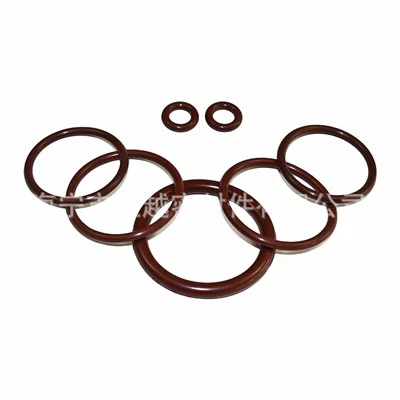
Understanding Fluorosilicone O Rings
First off, let’s get a bit of background on Fluorosilicone O Rings. They’re made from a special type of rubber material that combines the best of both worlds – the heat resistance of silicone and the chemical resistance of fluorocarbons. This makes them super versatile and suitable for a whole bunch of applications.
Fluorosilicone O Rings are known for their excellent sealing properties. They can create a tight seal in various environments, whether it’s in a high – pressure system or a low – temperature setting. But what about when they meet acids? That’s what we’re gonna dig into.
How Acids React with Fluorosilicone O Rings
Acids come in different types, and their reactions with Fluorosilicone O Rings can vary. There are strong acids like sulfuric acid and hydrochloric acid, and weak acids like acetic acid.
Strong Acids
When Fluorosilicone O Rings come into contact with strong acids, the situation can be a bit tricky. Strong acids are highly reactive and can potentially break down the chemical structure of the O Ring. For example, sulfuric acid is a very corrosive acid. If a Fluorosilicone O Ring is exposed to concentrated sulfuric acid for a long time, it might start to show signs of degradation.
The acid can attack the polymer chains in the Fluorosilicone material. This can lead to changes in the O Ring’s physical properties. The O Ring might become softer, lose its elasticity, or even develop cracks. In extreme cases, the O Ring could completely fail, which is a big no – no in any application where sealing is crucial.
However, it’s not all bad news. Fluorosilicone O Rings do have some level of resistance to strong acids. The key is the concentration of the acid and the duration of exposure. If the acid concentration is relatively low and the exposure time is short, the O Ring can often withstand the contact without significant damage.
Weak Acids
Weak acids are generally less aggressive towards Fluorosilicone O Rings. For instance, acetic acid, which is found in vinegar, is a weak acid. When a Fluorosilicone O Ring is exposed to acetic acid, it’s less likely to experience severe degradation.
Weak acids usually don’t have the same ability to break down the polymer chains as strong acids. So, in most cases, the O Ring will maintain its physical properties and sealing performance. But still, it’s important to monitor the situation, especially if the exposure is continuous over a long period.
Factors Affecting the Performance
There are several factors that can influence how Fluorosilicone O Rings perform when in contact with acids.
Temperature
Temperature plays a huge role. Higher temperatures can accelerate the chemical reactions between the acid and the O Ring. When it’s hot, the molecules in the acid and the O Ring are more active, which means the acid can react more quickly with the O Ring material.
For example, if a Fluorosilicone O Ring is in contact with an acid at room temperature, it might show only minor signs of wear over time. But if the temperature is raised significantly, say to 150°C or more, the degradation process can speed up. The O Ring might start to lose its shape and sealing ability much faster.
Acid Concentration
As I mentioned earlier, the concentration of the acid is crucial. A highly concentrated acid is more likely to cause damage to the O Ring compared to a diluted acid. Even a small amount of a concentrated acid can have a big impact on the O Ring’s performance.
For instance, a 98% concentrated sulfuric acid will be much more corrosive than a 10% sulfuric acid solution. So, when using Fluorosilicone O Rings in an acidic environment, it’s important to know the exact concentration of the acid to assess the potential risks.
Exposure Time
The longer the Fluorosilicone O Ring is in contact with the acid, the more likely it is to experience damage. Even if the acid is weak or the temperature is low, continuous exposure over a long period can still lead to degradation.
For example, if an O Ring is constantly in contact with a weak acid for months or even years, it might gradually lose its elasticity and sealing properties. So, it’s important to consider the expected exposure time when choosing Fluorosilicone O Rings for an application.
Applications in Acidic Environments
Despite the potential challenges, Fluorosilicone O Rings are still used in many applications where they come into contact with acids.
Chemical Processing Industry
In the chemical processing industry, there are many processes that involve acids. Fluorosilicone O Rings are used in pumps, valves, and pipelines to ensure a tight seal. For example, in a sulfuric acid production plant, Fluorosilicone O Rings are used to prevent leaks in the equipment.
The O Rings need to be able to withstand the corrosive nature of the acid while maintaining their sealing performance. Thanks to their chemical resistance, Fluorosilicone O Rings can do a pretty good job in these applications, as long as the operating conditions are within their limits.
Laboratory Equipment
In laboratories, acids are commonly used for various experiments. Fluorosilicone O Rings are used in laboratory equipment such as burettes, pipettes, and reaction vessels. They help to create a seal that prevents the acid from leaking out.
Since laboratory experiments often involve different types of acids and varying concentrations, Fluorosilicone O Rings need to be able to adapt. Their versatility makes them a popular choice for these applications.
Our Fluorosilicone O Rings
As a supplier of Fluorosilicone O Rings, we take pride in the quality of our products. Our O Rings are made from high – grade Fluorosilicone material that has been carefully formulated to provide the best possible performance in acidic environments.
We conduct rigorous testing on our O Rings to ensure they can withstand different types of acids and operating conditions. Our team of experts is always available to provide advice on the best O Ring for your specific application.
If you’re in an industry that requires sealing solutions in acidic environments, our Fluorosilicone O Rings could be the perfect choice for you. We offer a wide range of sizes and specifications to meet your needs.
Conclusion
In conclusion, Fluorosilicone O Rings can perform well in contact with acids, but it depends on several factors such as the type of acid, concentration, temperature, and exposure time. They have a certain level of resistance to acids, which makes them suitable for many applications in acidic environments.
EPDM O Ring If you’re looking for reliable Fluorosilicone O Rings for your acidic applications, don’t hesitate to get in touch. We’re here to help you find the right solution for your needs. Whether you’re in the chemical processing industry or a laboratory, we can provide you with high – quality O Rings that will get the job done.
References
- "Handbook of Elastomers" by K. C. Frisch and L. P. Runt
- "Rubber Technology" by Maurice Morton
Haining Chaoyue Seals Co., Ltd.
As one of the most professional fluorosilicone o ring manufacturers and suppliers in China, we offer a wide range of products with superior quality. Please feel free to wholesale high quality fluorosilicone o ring made in China here from our factory. Also, custom service is available.
Address: Building 9, 158 Lianhong Road, Yuanhua Town, Jiaxing, Zhejiang, China.
E-mail: chaoyue@cyseals.com
WebSite: https://www.hncyseal.com/
