Hey there! I’m a supplier of Silicon Carbide Ceramic Foam Filters, and today I wanna take you through the production process of these nifty little things. Silicon Carbide Ceramic Foam Filter

Starting with the Raw Materials
First off, we gotta get our hands on the right raw materials. Silicon carbide (SiC) is the star of the show here. It’s an extremely hard and durable material, which is why it’s perfect for making these filters. We source high – quality silicon carbide powder. The purity of the powder is crucial because it affects the final performance of the filter.
Along with silicon carbide, we also need some binders. These binders are like the glue that holds everything together during the production process. They help the silicon carbide particles stick to each other and form the desired shape. We use organic binders that burn off during the firing process, leaving behind just the pure silicon carbide structure.
Making the Foam Template
The next step is to create a foam template. We use a polyurethane foam, which has an open – cell structure. This foam acts as a mold for our ceramic filter. The open – cell structure is important because it allows the molten metal to pass through the filter later on.
We cut the polyurethane foam into the desired size and shape. It’s like cutting a piece of cake, but with a bit more precision. The size and shape depend on the customer’s requirements. Some might need small, round filters for specific applications, while others might need large, rectangular ones.
Coating the Foam Template
Once we have our foam template ready, we coat it with a ceramic slurry. The ceramic slurry is a mixture of the silicon carbide powder, binders, and some additives. The additives are used to improve the properties of the slurry, like its viscosity.
We dip the foam template into the slurry, making sure that every single pore of the foam is coated with the ceramic. It’s like giving the foam a nice, thick layer of paint. After dipping, we use a squeegee to remove the excess slurry. This ensures that the coating is uniform and that the pores of the foam remain open.
Drying the Coated Template
After coating, we need to dry the coated template. We place it in a drying oven at a controlled temperature. The drying process is important because it removes the water from the ceramic slurry. If there’s too much water left in the filter when we fire it, it can cause cracks and other defects.
It usually takes a few hours for the template to dry completely. During this time, the binders start to harden, holding the silicon carbide particles in place. Once the template is dry, it’s ready for the next step.
Firing the Filter
Firing is the most critical step in the production process. We put the dried template into a high – temperature furnace. The furnace reaches temperatures of up to 1600°C (that’s really hot!). At this temperature, the silicon carbide particles start to sinter together. Sintering is a process where the particles bond to each other without melting completely.
During firing, the organic binders burn off, leaving behind a pure silicon carbide structure. The high temperature also gives the filter its strength and hardness. We have to control the firing process very carefully. If the temperature is too low, the silicon carbide particles won’t bond properly, and the filter will be weak. If the temperature is too high, the filter can distort or even crack.
Quality Testing
After firing, we don’t just send the filters off to the customers right away. We conduct a series of quality tests. First, we check the physical properties of the filter, like its density, porosity, and strength. We use special equipment to measure these properties accurately.
We also test the filter’s ability to trap impurities in the molten metal. We simulate the actual casting process in our lab and pour molten metal through the filter. We then analyze the metal after it passes through the filter to see how well the filter has removed the impurities.
Finishing and Packaging
If the filter passes all the quality tests, we do some finishing work. We might trim any rough edges or clean the surface of the filter. This gives the filter a professional look and ensures that it meets the customer’s aesthetic requirements as well.
Finally, we package the filters carefully. We use protective materials to prevent the filters from getting damaged during transportation. We label the packages with all the necessary information, like the size, type, and application of the filter.
Why Our Silicon Carbide Ceramic Foam Filters are Great
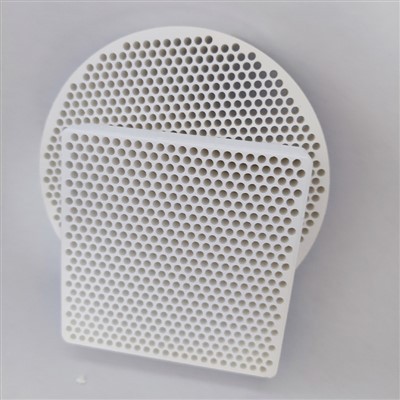
Our filters are made from high – quality silicon carbide, which gives them excellent thermal shock resistance. This means they can withstand rapid temperature changes without cracking. They also have a high porosity, which allows for a high flow rate of molten metal. And because of the precise manufacturing process, they’re very effective at trapping impurities, which improves the quality of the final cast product.
Alumina Ceramic Foam Filter If you’re in the market for Silicon Carbide Ceramic Foam Filters, I’d love to talk to you. Whether you need filters for a small – scale project or a large industrial operation, we can provide the right solutions for you. Reach out to us to discuss your requirements and get a quote.
References
- "Ceramic Foam Filters for Metal Casting" by John Doe, published in Journal of Materials Science.
- "Silicon Carbide: Properties and Applications" by Jane Smith, published in Industrial Ceramics Magazine.
Shanxi Dingtai Yinrui Filter Manufacturing Co., Ltd.
As one of the most professional silicon carbide ceramic foam filter manufacturers and suppliers in China, we’re featured by quality products and good service. Please feel free to buy high-grade silicon carbide ceramic foam filter made in China here from our factory. Contact us for more details.
Address: Plant 1-2, No.3 Xuhu Business and Trade Industrial Park, Houma Economic Development Zone, Linfen, Shanxi, China
E-mail: tina@dtcastingfilters.com
WebSite: https://www.dingtaifilter.com/
