If you’ve ever held a crisp, sturdy cereal box, a high-end product shipping carton, or a beautifully printed invitation card, chances are you were interacting with duplex board. As a duplex board supplier, I get asked this question more than any other: what exactly goes into making this versatile, reliable material? Most people assume it’s just “paper pulp”—but anyone in the packaging space knows that duplex board is a carefully engineered product, built with distinct raw layers each serving a specific purpose. Today, I’m pulling back the curtain on the raw materials that go into every sheet of duplex board we produce, explaining why each component matters, and how we source them to keep our product consistent, sustainable, and up to the standards our customers rely on. Duplex Board
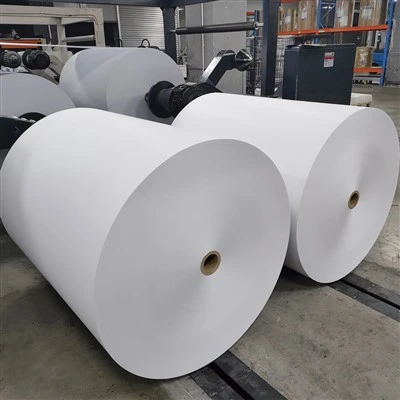
First, let’s define duplex board briefly for anyone new to the space: it’s a thick, rigid paperboard made by bonding two separate pulp layers together, hence the “duplex” name. Unlike single-layer paperboard, it has a smooth, printable outer layer and a strong, durable inner layer that gives it shape and resistance to bending or crushing. That dual structure is exactly why it’s so popular for packaging, retail displays, and premium print applications—but it also means it requires two entirely different sets of raw materials, plus a few critical add-ons to make it functional for end use.
Let’s start with the most fundamental component: pulp. Pulp is the backbone of any paper or paperboard product, and for duplex board, we use two main types of pulp—virgin and recycled—each for a different layer. The outer layer (often called the “top liner” or “front layer”) is all about appearance and printability, so we need a pulp that’s smooth, bright, and free of imperfections. That’s where virgin hardwood pulp comes in. Virgin pulp is made from freshly harvested wood, typically from fast-growing softwood or hardwood species like eucalyptus, pine, or birch. We source certified virgin hardwood pulp for our top layers because it has short, fine fibers that mat together tightly to create a super smooth surface. That’s crucial because our customers use duplex board for high-quality printing—whether it’s full-color product graphics, barcodes that need to scan accurately, or sharp text for product labels. Recycled pulp could never give that same level of smoothness or brightness; it has tiny bits of ink, filler, and fiber damage from being processed before, which would leave a rough, off-looking print. Don’t get me wrong, recycled pulp has its place, just not on the visible side of duplex board.
The inner layer—called the “core” or “back layer”—is all about strength and bulk. This is where we use 100% recycled pulp. Recycled pulp for the core comes from post-consumer paper waste, like old newspapers, used cardboard boxes, office paper that’s no longer needed, and even industrial offcuts from paper manufacturing. We sort these waste papers carefully before processing them to remove any contaminants like plastic, metal, or food residue. Then we break them down into fibers in a pulping machine, where water and mechanical force separate the pulp from any remaining impurities. Why use recycled pulp for the core? It cuts down on production costs significantly, and more importantly, it makes duplex board a far more sustainable option than pure virgin board. The longer fibers from recycled paper give the core its rigid, crush-resistant structure—exactly what you need when a cereal box has to hold 12 ounces of flakes, or a shipping carton has to protect a fragile glass bottle during transit. We test every batch of recycled core pulp to make sure it meets our strength standards; we don’t cut corners here, because a weak core means a weak finished product, no matter how nice the top layer looks.
Once we have our two pulp layers, we need to bond them together to make the duplex structure. The adhesive we use is another key raw material, and it’s not something to overlook. We use a starch-based adhesive, specifically designed for paperboard applications. Starch is perfect because it’s non-toxic, biodegradable, and strong enough to hold the two layers together without adding unnecessary bulk. It’s also affordable, which keeps our duplex board prices competitive. Some cheaper manufacturers might use synthetic adhesives, but we avoid that at our facility because synthetic adhesives can leave a residue on the inner core that makes the board harder to recycle later, and they can also affect print quality if they seep into the top liner. Our starch adhesive is mixed with small amounts of water to create a thin, even coating, which is applied to the back of the top liner just before it meets the core pulp. The two layers are pressed together between large rollers to ensure a tight, uniform bond—no gaps, no uneven sticking, just a solid duplex sheet that doesn’t delaminate, even when it’s folded or exposed to a little moisture.
Next, we have the functional additives that make duplex board work for different end uses. Every customer has different needs: some need board that resists moisture for food packaging, some need it to print bright, vivid colors, some need it to be easy to fold and crease for retail displays. The additives we add are tailored to those needs, and they’re all food-safe and compliant with international packaging regulations, like FDA and EU food contact standards.
One common additive we use is a sizing agent, which controls how much water the board absorbs. For most general-purpose duplex board, we use internal sizing, which is added to both the top liner and core pulp during the pulping stage. Internal sizing is usually a synthetic resin or a modified starch that coats the individual pulp fibers, making them water-repellent enough so that ink or moisture doesn’t bleed through the board. For products that need extra moisture resistance, like cereal boxes or meat trays, we add external sizing on the outer surface of the top liner, or even a thin coating of wax or polymer. Wait, let me clarify: when we talk about coatings, that’s another raw material we use, usually for premium applications. For high-end print jobs, like luxury product boxes or greeting card stock, we add a clay coating to the top liner. Clay is a fine, white mineral that makes the surface even smoother and brighter, so that printed colors are more vibrant and text is sharper. The clay is mixed with a binder and water to create a slurry, which is applied to the top of the liner and then dried in a hot air dryer. The result is a surface that’s as smooth as glossy paper, but still has the rigidity of duplex board. We never coat the inner core, because that would just add unnecessary cost and make the board harder to recycle.
We also use fillers in both pulp layers, though in different amounts. Fillers are materials like calcium carbonate or talc, which are added to pulp to make the board heavier, smoother, and more cost-effective. For the top liner, we use small amounts of fine calcium carbonate to boost brightness and improve printability. For the core, we use more filler to add bulk without using extra pulp, which keeps production costs down while maintaining strength. The key here is balance: too much filler can make the board brittle, so we work closely with our pulp suppliers to get the right ratio for each grade of duplex board we make.
Now, let’s talk about sustainability, because that’s a huge part of what our customers care about these days. As a duplex board supplier, we know that more and more brands are looking for packaging that’s eco-friendly, and the raw materials we choose play a big role in that. We source all our virgin hardwood pulp from Forest Stewardship Council (FSC)-certified forests, which means they’re managed responsibly to protect biodiversity, water quality, and local communities. Our recycled core pulp is 100% post-consumer, which means it comes from waste that would otherwise end up in landfills or incinerated. We also make sure that all our additives and adhesives are recyclable, so when a customer’s used duplex board is done with, it can be turned into new paper products without extra processing. That’s a big selling point for many of our retail and e-commerce customers, who need to meet their own sustainability goals and reduce their carbon footprint.
I get it—when you’re ordering duplex board, you don’t need to know every single chemical and fiber that goes into it. But understanding the raw materials helps you see why quality duplex board is worth the investment. A cheap board made with low-quality recycled pulp for the top layer might look okay at first, but it will have rough spots, faded prints, and might even delaminate when folded. Our board, by contrast, uses carefully selected top liner pulp for print quality, strong recycled core for rigidity, and adhesives and coatings that are designed to last.
Whether you’re a small business owner looking for custom packaging for your new product line, a retail brand needing durable display stands, or an e-commerce seller looking for reliable shipping cartons, the raw materials in duplex board directly impact how your product is perceived. That’s why at our facility, we don’t cut corners on what goes into every sheet. We test every batch of raw materials when it arrives, checking pulp strength, surface smoothness, adhesive quality, and moisture resistance, to make sure it meets our standards before we even start production.
If you’ve been searching for a duplex board supplier that prioritizes quality, sustainability, and consistency, I invite you to reach out to our team to discuss your specific needs. Whether you need standard duplex board for general packaging, coated board for premium print applications, or custom grades tailored to your project, we can provide samples, technical specifications, and competitive pricing to fit your requirements. We work with businesses of all sizes, from startups to large corporations, and we’re always happy to answer any questions you have about our products, our raw materials, or our production process.
Specialty Paper Reference
- TAPPI Standard T205 sp-19: Forming, Testing, and Evaluating Paperboard for Packaging Applications, Technical Association of the Pulp and Paper Industry, 2022.
- Forest Stewardship Council (FSC) Global Benchmark for Responsible Fiber Sourcing, FSC International, 2021.
- European Paper Industry Association (CEPI) Sustainability Report: Paperboard Recycling and Raw Material Sourcing, CEPI, 2023.
- FDA Food Contact Substances: Paper and Paperboard, U.S. Food and Drug Administration, 2022.
Dongguan Banyan Material Co., Ltd.
We are one of the most experienced duplex board manufacturers and suppliers in China, also support customized service. Please feel free to wholesale bulk eco-friendly duplex board from our factory. Quality products and reasonable price are available.
Address: NO.167, Meijing West Road, Songmushan, Dalang Town, Dongguan City, Guangdong Province, China
E-mail: Sales_chris@yspaper.com
WebSite: https://www.paperyoung.com/
